
Spokane Previous Residents by Era
Different Spokane sources answer different parts of “who lived here before?” Begin with current Spokane SCOUT data, then choose the Spokane record nearest the time in question. A Spokane deed supports title, a Spokane directory supports a dated address entry, a census supports a Spokane household enumeration, and a Spokane permit supports work on the structure.
| Source | Years It Covers | Where Held | What It Shows |
|---|---|---|---|
| Recorded land index | 1960-2026 online | County Auditor and Digital Archives | Grantor, grantee, instrument, date and legal clues |
| City directories | Selected volumes from 1885; broad State Library runs | Spokane Library, State Library, Digital Archives | Dated name, address, work and household clues |
| Federal census | Public through 1950 | NARA and library databases | Households in an enumeration district |
| Building permits | Recent three-year map; older scans vary | City permit map and Historic Spokane | Project, address, date and applicant clues |
| Sanborn maps | 1884-1965 local coverage | Spokane Library and Library of Congress | Building footprint, materials and address-era context |
| Obituary and probate | Early 1900s onward for obituary index | Spokane Library and County Clerk | Publication lead, heirs, notices and estate details |
For a modern Spokane transfer, start with the recorder. For an early twentieth-century Spokane household, pair a directory with the nearest public census and a Spokane Sanborn sheet. The Spokane Library catalog lists identified volumes rather than one guaranteed unbroken run, so absence from one year may simply mean that Spokane edition is missing.
Anchor Spokane Previous Residents to a PID
Enter the present Spokane address in the Spokane County SCOUT property search. Copy the Spokane parcel number, site address, listed owner, taxpayer, legal description, and recent sale or permit links. The Spokane site address identifies the land; the mailing address only tells where tax correspondence goes. A mismatch does not prove that the Spokane owner lives elsewhere or that another person occupies the building.
The Spokane legal description is often more durable than a street number. It may name a Spokane subdivision, lot, block, or section quarter. Spokane's PID has a local decoding aid: the fifth digit shows a quarter code or multiple-section condition. Keep both PID and legal text in the Spokane research log, especially if a parcel was split or merged.
Trace Spokane Previous Residents Through Deeds
The Spokane County Recorder index moves a Spokane parcel backward from its current owner. Search Spokane parties and the legal description together. Common Spokane names are less risky when the document number, parcel, lot, and block stay attached to each result.
- Copy the current owner and legal description from SCOUT.
- Find that owner's acquisition deed as a grantee. Record the grantor, date, type, and number.
- Search the prior grantor as a grantee, while keeping the same land description.
- Repeat until the online trail reaches its limit or the parcel identity changes.
- For earlier instruments, use Auditor public computers, deed books, microfilm, or the Eastern Region Archives.
- Grantor / grantee
- The grantor transfers an interest; the grantee receives it.
- Chain of title
- The linked sequence of recorded transfers for the same land.
- Legal description
- The formal land identity based on lot, block, plat, or survey terms, which can survive address changes.
Spokane transfers can lead to a trust, estate, business, or several grantees rather than one person. Record each Spokane party role. A deed identifies Spokane title parties, not all past occupants.
Date Spokane Previous Residents Records
Online land records cover 1960 through 2026, with current-year data potentially incomplete. The Washington Digital Archives reports 4,402,295 indexed records. A second cutoff changes how the numbers read: instruments before June 3, 1996 generally use a ten-digit recording number with volume and page; later records use a seven-digit document number.
The public index may show an entry even when the image is withheld or office-only. Broader image access is available on public computers at the Auditor's office. Copies can also be requested in person, by mail, or by phone. A mail request should include the document number, return address, and payment. A street address alone may not be enough, so include the PID, party, rough year, and instrument type.
The recorder search shown here is the starting screen for that backward chain.
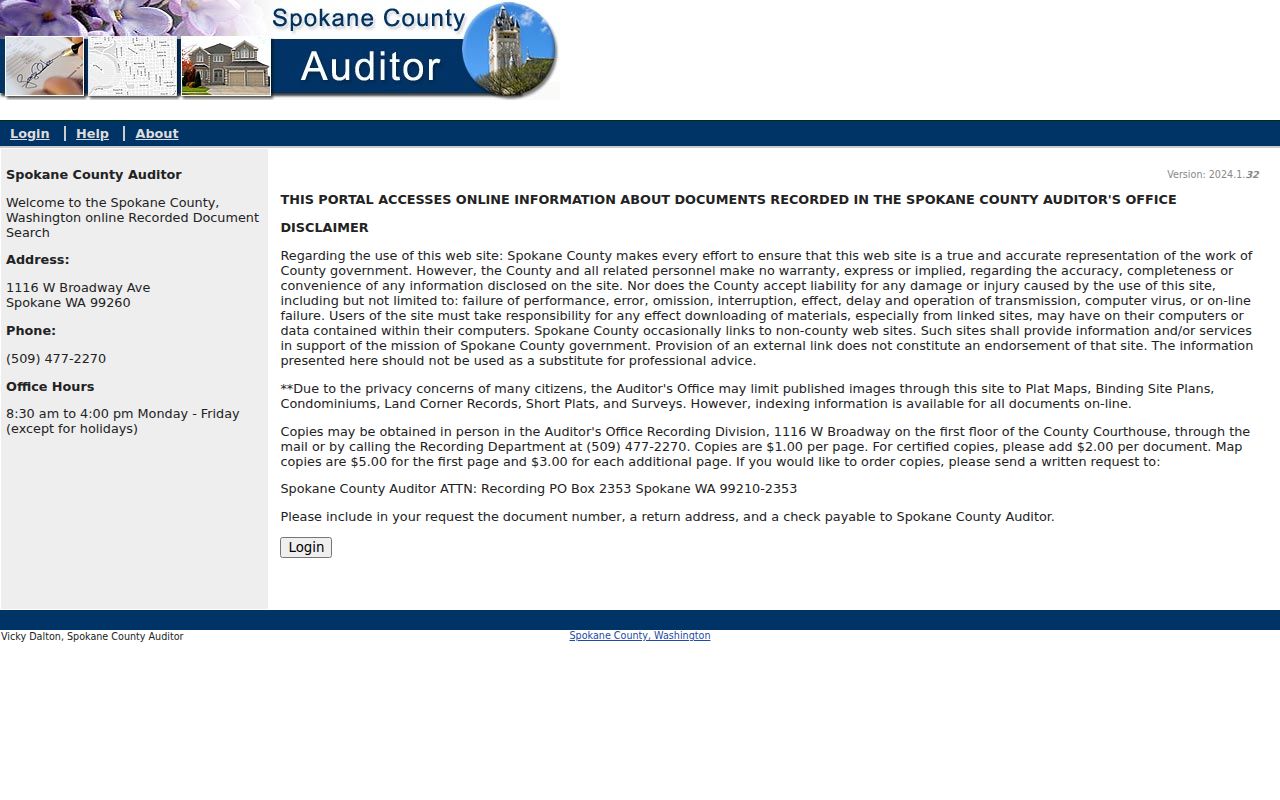
Its party, document, and date controls show why a legal description and known transfer date are stronger than a loose address query.
Research Spokane Previous Residents Locally
The Spokane Library house-history guide routes research toward city directories, permits, maps, and special collections. Inland Northwest Special Collections is on the third floor of Central Library, with staff help by phone or email. Exact reverse-directory years were not established in the research, so ask whether the needed edition has a street or criss-cross section.
The library's Spokane house-history resource brings the main address-era sources into one local research path.
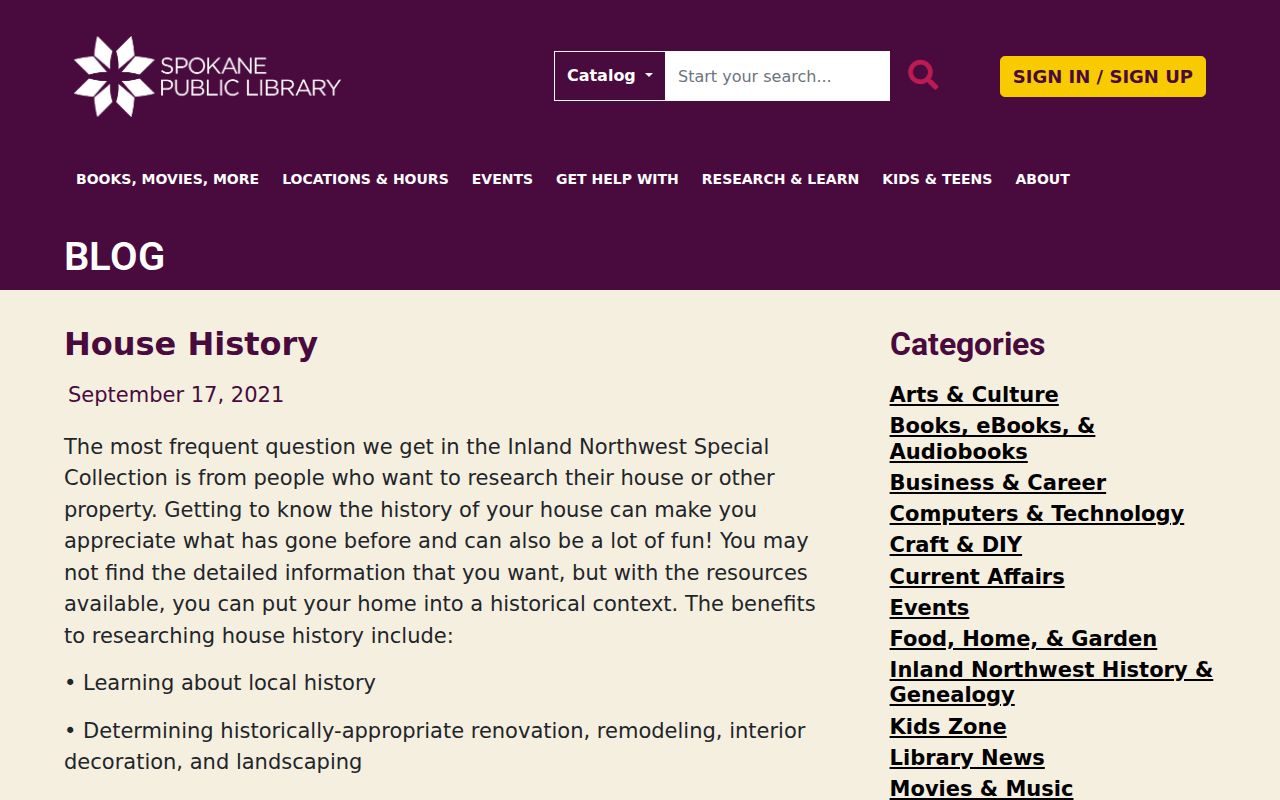
The captured resource helps connect a Spokane address to directories, maps, permits, and other evidence without treating any single source as a full household record.
Historic Spokane's property research path adds building permits, newspapers, photographs, and archives. Its Northwest Room holdings exceed 13,000 items. These sources can explain an addition, address label, or past use without turning an assessor construction year into unsupported proof.
The successful Historic Spokane capture highlights that local workflow.
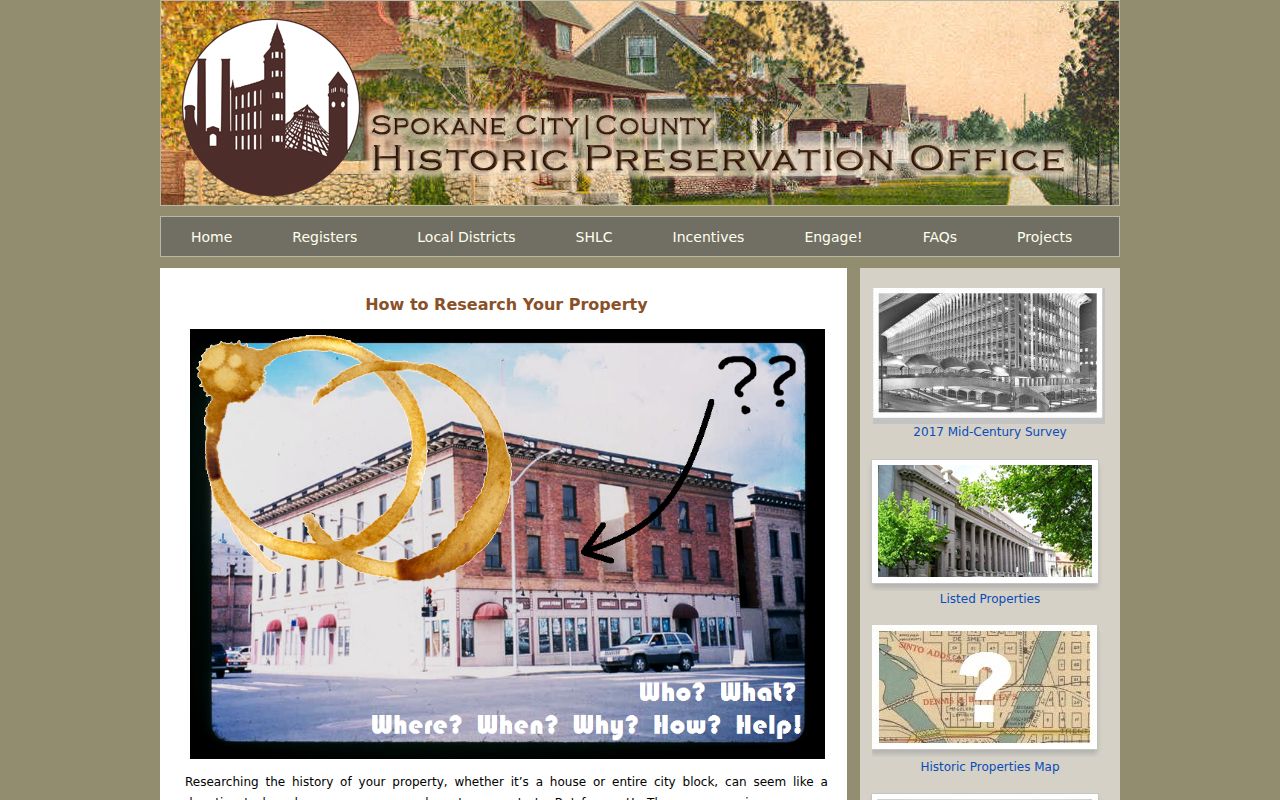
The resource list provides bridges when the online deed index or a single directory year stops short.
Map Spokane Homes Across Time
Sanborn fire-insurance maps provide building evidence rather than resident names. They can place the household search in the right address era. Spokane coverage begins with blocks in 1884, includes a full 1891 set, and continues through later editions and updates into 1965. Compare the exact sheet, street label, lot, footprint, materials, and outbuildings with the deed's legal description.
Permits add project dates. Historic permit microfiche was removed in 2014, while completed permits were scanned in 2016. Recent permit activity is available in a public city map for up to three years and updates nightly. If an older record is absent, call it a gap. Do not silently fill it with a tax-card date.
Note: Spokane research found no single official citywide renumbering year, so verify any old-to-new address match with maps, plats, directories, and permits.
Confirm Spokane Past Households
Owners are only one layer of a Spokane household history. A dated alphabetical or criss-cross entry may place a person at an address. A public census schedule can show the household, relationships, ages, and work recorded on its enumeration date. An enumeration district is the local census area assigned to one census taker.
- Find the address or name in a directory and record its exact year and edition.
- Translate old street or city labels with Sanborn sheets, plats, and later directories.
- Locate the nearest public census through 1950 and identify its enumeration district.
- Compare names and ages, then test the match in newspapers, vital indexes, or deeds.
- State separately which record supports residence and which supports ownership.
The 1890 federal population schedules were destroyed, so Spokane directories, Sanborn maps, and newspapers are the practical bridge for that period. Hillyard, suburban, and Spokane Valley volumes may also need searches apart from the city run. The detailed holdings appear on the Spokane city directory page.
Spokane Library's obituary directory points to more than 100,000 regional notices from the early 1900s onward. It identifies a publication and location rather than always supplying the notice itself. County Clerk probate files may name heirs, addresses, inventories, and final orders. Use these as trail endpoints, not as permission to expose private facts about living people.
Lawful use. Research Spokane past occupants for house history, family history, or personal curiosity. Never use a record to track, harass, threaten, or harm a living person.